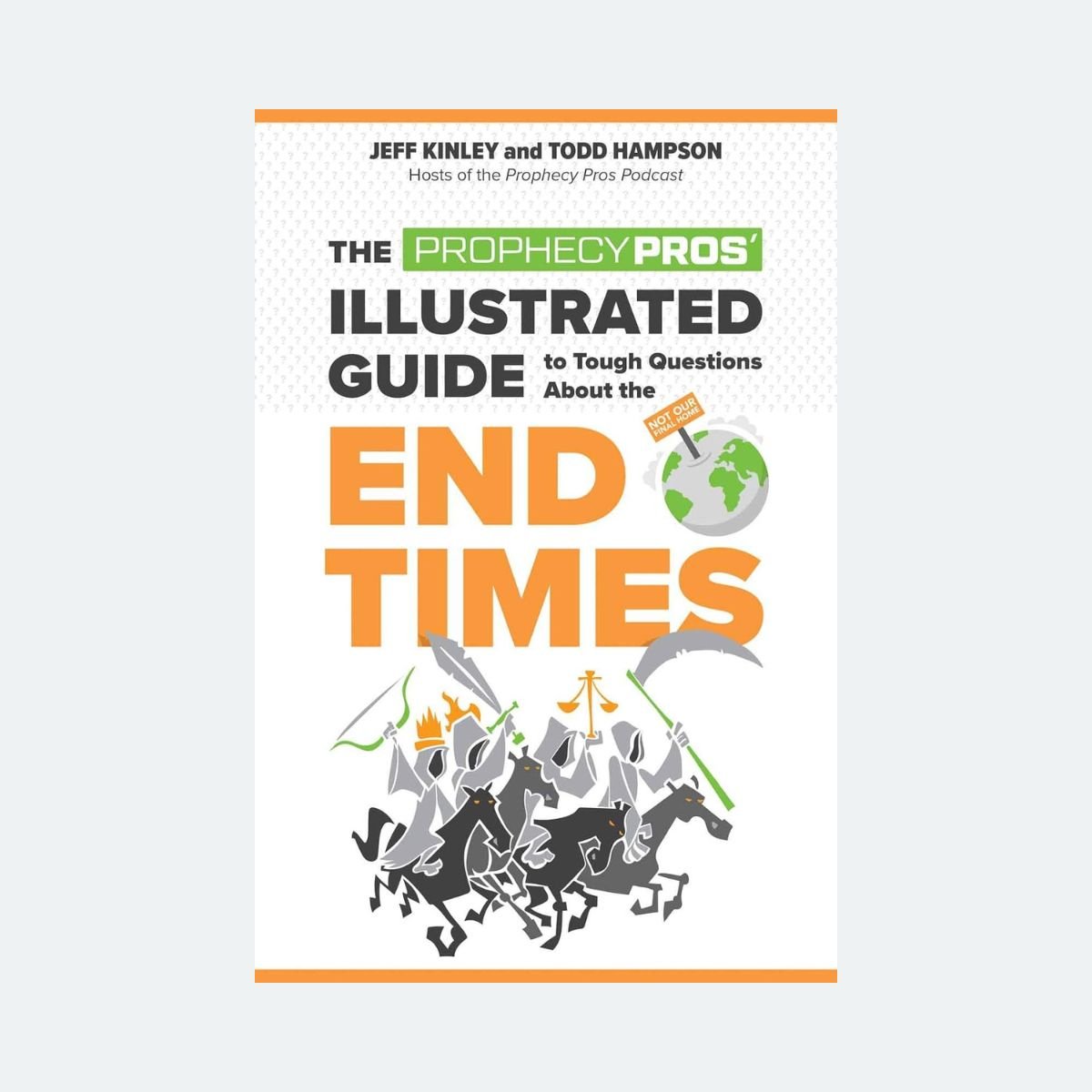
When we talk about the future, especially the ultimate future of humanity and the cosmos, we're not just venturing into speculation. For billions, these discussions are deeply rooted in sacred texts, ancient prophecies, and the rich tapestry of theological thought. The way we interpret these prophecies, particularly concerning the "end times," isn't merely academic; it shapes our worldview, our sense of urgency, and how we live our lives today. This is the profound theological impact on prophecy and end times interpretations.
It's a field of study known as eschatology—from the Greek eschatos, meaning "last"—and it grapples with the final events of world history, the return of Christ, and humanity's ultimate destiny. This isn't about setting dates for doomsday scenarios, a practice explicitly cautioned against in Matthew 24:36, but rather about revealing God's sovereignty, faithfulness, and justice. It's meant to inspire a life of holy expectation, purpose, and evangelism, not fear or apathy.
At a Glance: Key Takeaways on End Times Interpretations
- Eschatology isn't date-setting; it's about God's character. It inspires living with urgency, holiness, and hope.
- It divides into individual (after death) and general (world history) aspects. Our focus here is primarily general eschatology.
- Major interpretive frameworks include Rapture Theology, Millennial Views (Pre-, Post-, A-), and Preterism (Full, Partial).
- The "Satan's Little Season" view offers a less common, alternative historical interpretation.
- A popular chronological framework involves the Rapture, a seven-year Great Tribulation, the Second Coming, the Millennial Reign, and finally, the New Heavens and New Earth.
- Key players like the Antichrist, False Prophet, and the Mark of the Beast are central figures in some interpretations of the Tribulation.
- Theological approaches like Dispensationalism and Covenant Theology significantly influence how Israel and the Church's roles are understood.
- The goal isn't to pick a "winning" interpretation, but to foster faithful living, understanding, and a confident anticipation of Christ's ultimate victory.
Laying the Foundation: What is Eschatology Anyway?
Imagine attempting to piece together a massive, divine puzzle using ancient maps, poetic verses, and historical records spanning millennia. That's essentially what Christian eschatology endeavors to do. It's the systematic study of what the Bible teaches about the future, particularly the "last things."
While it draws heavily from the prophetic books—like Daniel in the Old Testament and Revelation in the New—it also synthesizes insights from historical narratives, wisdom literature, and the teachings of Jesus Himself. The beauty of eschatology lies in its overarching purpose: to illuminate God's unshakeable control over history, His faithfulness to His promises, and His ultimate plan for justice and redemption. It offers a grand narrative that gives meaning to our present struggles and hope for a future far beyond our current comprehension.
Broadly, eschatology splits into two main branches:
- Individual Eschatology: This is about the destiny of each person after physical death. Where do we go? What happens to our souls? Concepts like heaven, hell, and the intermediate state fall under this category.
- General Eschatology: This focuses on the grand cosmic narrative—the final events of human history. This includes topics like the Second Coming of Christ, the Millennium (a thousand-year reign), the resurrection of the dead, the final judgment, and the creation of new heavens and a new earth. Our deep dive today will primarily focus on this broader, general scope.
The Big Picture: Core Eschatological Frameworks
When Christians approach biblical prophecy, they often do so through established interpretive lenses. These aren't just minor disagreements; they represent fundamentally different ways of understanding Scripture, history, and God's interaction with humanity. Each framework offers a coherent (to its adherents) narrative of how God's ultimate plan unfolds.
Rapture Theology: Caught Up in the Air?
One of the most widely discussed and often dramatized concepts in end times theology is the "Rapture." Derived from the Latin rapio (meaning "to seize" or "catch up") and the Greek harpazo from 1 Thessalonians 4:16-17, it describes an event where believers are suddenly removed from Earth to meet Christ in the air. This concept often generates significant debate, particularly regarding its timing relative to a period known as the Tribulation.
While the idea of believers meeting Christ in the air has ancient roots, the modern, distinct theological interpretation of a separate "rapture" event for the church, preceding or occurring within the tribulation, is often attributed to the 19th century. Some historians trace its popularization to figures like John Nelson Darby, whose understanding was reportedly influenced by an account of a dream by a young Scottish girl, Margaret McDonald, in 1830. Historically, the phrase "caught up in the air to meet the King" evoked the common practice of citizens going out to meet a returning dignitary or monarch before escorting them back to the city.
The timing of this "catching away" leads to three primary positions:
Pre-Tribulation Rapture (Pre-Trib)
This is perhaps the most popular view among evangelical Christians, often closely associated with Dispensationalism. In this framework, the Rapture occurs before a future seven-year period of intense global suffering known as the Great Tribulation. Adherents believe that the Church, as the Bride of Christ, will be spared from experiencing God's wrath during this time, citing passages like Revelation 3:10. The Tribulation is seen as a period primarily for the judgment of the unrepentant world and the preparation of national Israel for their Messiah.
- Key Idea: The Church is taken out; then the Tribulation begins on Earth.
- Scriptural Support: 1 Thessalonians 4:16-17 (the rapture), Revelation 3:10 (promise to be kept from the hour of trial).
Mid-Tribulation Rapture (Mid-Trib)
This view posits that the Rapture will occur at the midpoint of the seven-year Tribulation period. Proponents often connect it with events described around the sounding of the seventh trumpet in Revelation, suggesting that while believers will endure the initial phase of tribulation, they will be removed before the "Great Tribulation" or the outpouring of God's most severe wrath.
- Key Idea: Believers go through the first half of the Tribulation, then are raptured.
- Scriptural Support: Often interprets the "middle" events of Daniel's 70th week (Daniel 9:27) or specific points in Revelation as the timing.
Post-Tribulation Rapture (Post-Trib)
In this perspective, Christians will endure the entire Tribulation period. The Rapture and the Second Coming of Christ are viewed as one simultaneous event that occurs after the Tribulation. This view emphasizes the biblical call to endurance through suffering and sees the Church as being present through all trials, just as Christ Himself suffered. Passages like Matthew 24:29-31, where Jesus describes His return immediately after the Tribulation, are central to this understanding.
- Key Idea: The Church endures the full Tribulation, and the Rapture and Second Coming are essentially the same event.
- Scriptural Support: Matthew 24:29-31; Revelation 7:14.
Views on the Millennium: A Thousand Years of Reign?
Another major point of divergence in eschatological thought revolves around the "Millennium," referring to the thousand-year reign of Christ mentioned in Revelation 20:1-6. Is this a literal 1,000-year period on Earth? Or is it symbolic? The answer shapes how one interprets much of biblical prophecy.
Pre-Millennialism
This view believes that Jesus Christ will return to Earth before a literal thousand-year reign of peace and righteousness. Following the Tribulation (often, but not always), Christ physically establishes His kingdom from Jerusalem, fulfilling Old Testament promises made to national Israel. During this period, Satan is bound, and righteousness prevails, though sin still exists.
- Key Idea: Christ returns, then reigns for 1,000 literal years on Earth.
- Variations: Historic Pre-Millennialism (rapture and second coming are one post-trib event, then millennium) and Dispensational Pre-Millennialism (pre-trib rapture, then tribulation, then second coming, then millennium).
Post-Millennialism
In contrast, Post-Millennialism argues that Christ's Second Coming occurs after the Millennium. The Millennium, in this view, is not a literal 1,000 years but a long, indeterminate symbolic period within the current church age. During this time, the world increasingly embraces Christian values due to the successful spread of the Gospel, leading to a "golden age" of peace and righteousness on Earth. Christ then returns to a largely redeemed world.
- Key Idea: Through the Church's efforts, the world becomes Christianized, leading to a "Millennium" of peace, after which Christ returns.
- Scriptural Support: Passages emphasizing the success of the Gospel (Psalm 22:27-28; Isaiah 2:2-4).
Amillennialism
Amillennialism interprets the "1,000 years" as entirely symbolic. It represents the entire period between Christ’s first and second coming—the current church age. Christ is seen as reigning now from heaven through His Church, and Satan is considered "bound" (in the sense that his ability to deceive the nations is restricted) through Christ's victory on the cross. The Second Coming is then immediately followed by the general resurrection of all people, the final judgment, and the eternal state (new heavens and new earth). This view is common in Covenant Theology.
- Key Idea: The Millennium is symbolic of the present age; Christ reigns now from heaven, and His return immediately ushers in eternity.
- Scriptural Support: Revelation 20 as symbolic, current reign of Christ (Colossians 1:13; Hebrews 12:2).
Preterism: Was It All in the Past?
The term "Preterism" comes from the Latin praeter, meaning "past." This interpretive approach suggests that many biblical prophecies, particularly those in Revelation and Jesus's Olivet Discourse (Matthew 24, Mark 13, Luke 21), have already been fulfilled in the past. The most common fulfillment period cited is the destruction of Jerusalem and its temple in A.D. 70 by the Roman Empire.
Partial Preterism
This is the more widely accepted form. Partial Preterists believe that many prophecies—such as the "coming of the Son of Man" in judgment upon Jerusalem, the persecution described, and the falling away—were fulfilled in the first century, culminating in A.D. 70. However, they maintain that certain key prophecies, like the final physical resurrection of the dead, the ultimate Second Coming of Christ (in a visible, physical sense), and the final judgment, are still future events.
- Key Idea: Most prophecies relate to ancient Israel and were fulfilled in A.D. 70, but some significant events are still future.
Full Preterism
A more radical position, Full Preterism asserts that all biblical prophecy, including the Second Coming, the general resurrection, and the final judgment, was completely fulfilled by the end of the first century (A.D. 70 being the primary culmination). In this view, the "Second Coming" is interpreted as a spiritual, not physical, event, and the "resurrection" as a spiritual transformation rather than a bodily one. This position is generally considered outside mainstream Christian orthodoxy by most denominations.
- Key Idea: All prophecies, including the Second Coming and resurrection, were fulfilled in A.D. 70.
Satan’s Little Season: A Less Common, Alternative View
While the previously mentioned frameworks represent the dominant theological perspectives, some less common interpretations exist, offering intriguing alternative chronologies. One such view, drawing from Revelation 20:7, suggests we are currently in "Satan's Little Season." This perspective often challenges conventional historical and theological timelines with bold claims.
Proponents of this view argue that certain biblical passages, like Jesus's statement that He would return in the lifetime of those He was speaking to (Matthew 16:28), indicate an early fulfillment of eschatological events. They suggest that the "end times tribulation" already occurred during Emperor Nero's persecution of Christians (mid-November 64 AD to June 68 AD), lasting the 42 months described in Revelation 13:5. In this interpretation, Jesus's return happened spiritually around 70 AD, initiating a 1,000-year Millennial Reign, perhaps symbolic, or tied to a historical period of relative peace or spiritual understanding.
According to this alternative chronology, after these 1,000 years, Satan was "released" from his binding. This release, they contend, coincided with cataclysmic historical events such as the "Mud Flood," comets, city-wide fires, and the destruction of old technologies—leading to the concept of "Tartaria," an alleged erased advanced civilization. They point to the widespread appearance of mental asylums and orphans globally during certain historical periods as evidence of a societal upheaval linked to Satan's release and a subsequent deception. This view posits a massive deception among those who preach a future Tribulation, believing such teachings pave the way for a final cataclysmic event and God's judgment that is yet to come, even after the Millennial period they believe has already concluded. It's a complex, multi-layered interpretation that fundamentally re-dates and re-contextualizes historical and biblical events.
A Common Interpretive Journey: The Chronology of Last Things
Many evangelical Christians, particularly those adhering to Dispensational Pre-Millennialism, follow a specific chronological framework for the "last things." This framework offers a step-by-step narrative of future events, emphasizing a distinct role for Israel and the Church.
The Rapture: The Church's Departure
The sequence often begins with the Rapture, where believers are "caught up" to meet the Lord in the air (1 Thessalonians 4:16-17). As discussed, the Pre-Tribulation view is most common here, suggesting this event occurs before the Tribulation, sparing the Church from God's wrath. This is seen as a distinct, private coming of Christ for His Church, removing them from Earth before the judgments.
The Great Tribulation: Seven Years of Unprecedented Judgment
Following the Rapture (in the Pre-Trib view), a future seven-year period known as the Great Tribulation commences on Earth. This is a time of unprecedented suffering, divine judgment, and global upheaval. It is primarily based on Daniel's prophecy of the seventieth week (Daniel 9:24-27), interpreted as a distinct seven-year period yet to be fulfilled. During this time, God's wrath is poured out on the unrepentant world (described with seals, trumpets, and bowls in Revelation), and Israel is prepared for national repentance and restoration.
- The 144,000: A significant group during the Tribulation are 12,000 from each of the twelve tribes of Israel (Revelation 7:1-8). These are sealed and protected by God, serving as powerful evangelistic witnesses to the world.
The Second Coming of Christ: Public Return and Judgment
At the end of the Great Tribulation, Jesus Christ makes His visible, public return to Earth (Matthew 24:30; Revelation 19). This is distinct from the Rapture, as Christ returns as a conquering King, accompanied by His saints, to execute judgment and establish His kingdom.
- Armageddon and Judgment: Christ defeats the forces of the Antichrist and the False Prophet at the Battle of Armageddon, casting them and Satan into the Lake of Fire.
The Millennial Reign: Christ's Earthly Kingdom
Immediately following the Second Coming, Christ establishes His 1,000-year Millennial Reign on Earth. This is understood as a literal fulfillment of Old Testament kingdom promises to Israel, where Christ rules with a rod of iron from Jerusalem, bringing unprecedented peace, righteousness, and justice to the world.
The Great White Throne Judgment: The Final Reckoning
After the Millennial Reign, Satan is released for a short time, then finally defeated and cast into the Lake of Fire. Then comes the Great White Throne Judgment (Revelation 20:11-15). This is the final judgment for all unrighteous dead throughout history. Two sets of books are opened: the books containing records of human deeds, and the Book of Life. Those whose names are not found written in the Book of Life are cast into the Lake of Fire, which signifies eternal separation from God.
New Heavens and New Earth: Eternity Begins
The culmination of God's plan is the creation of the New Heavens and New Earth (Revelation 21-22). This is the final, eternal state where God dwells with His people in perfect communion. The New Jerusalem descends, and all the curses of the Fall are removed: no more death, sorrow, crying, or pain (Revelation 21:4). This is the promise of unhindered, eternal fellowship with God.
Who's Who in the End Times Drama? Key Players and Symbols
Certain figures and symbols repeatedly appear in discussions of end times prophecy, particularly within the Tribulation framework. Understanding their supposed roles is crucial for grasping some interpretations.
- The Dragon: Unambiguously identified as Satan, the Devil (Revelation 12:9). He is the unseen, spiritual power behind the forces of evil that will oppose God and His people in the last days.
- The Antichrist: The ultimate human opponent of Christ. He is prophesied to be a charismatic political leader who rises to global power, demands worship, and unleashes severe persecution against God's people during the Tribulation.
- The False Prophet: A religious figure who works in conjunction with the Antichrist. He performs miracles and deceives humanity, compelling them to worship the Antichrist and receive the Mark of the Beast.
- The Mark of the Beast: This is depicted as a global economic and religious system enforced by the Antichrist. To buy or sell, people will be required to receive a "mark" (Revelation 13:16-17) on their right hand or forehead. This mark signifies allegiance to the Antichrist and leads to eternal judgment for those who accept it. The number 666 is symbolically associated with this system.
- The Whore of Babylon: A powerful symbolic figure (Revelation 17) representing a massive, corrupt, false religious and economic system that wields global influence, controls kings, and promotes idolatry and sin. Its ultimate destruction is foretold.
Divine Justice Unfolds: The Judgments of Revelation
The book of Revelation describes a series of escalating divine judgments poured out upon the Earth during the Tribulation period, often viewed sequentially. These are not random acts but precise fulfillments of God's justice.
- The Seven Seals: These are the initial judgments, opened by Christ (the Lamb). They include the Four Horsemen of the Apocalypse (representing conquest, warfare, famine, and death), followed by the cries of martyrs under the altar and cosmic disturbances (earthquakes, darkened sun/moon).
- The Seven Trumpets: More intense than the seals, these judgments primarily affect the natural world. They include fire and hail destroying a third of trees and grass; a third of the sea turning to blood, killing marine life; a third of fresh waters being poisoned; and a third of the sun, moon, and stars being darkened.
- The Seven Bowls: These represent the final, most severe, and rapid outpouring of God's wrath. They bring painful sores upon those who took the Mark of the Beast; seas and rivers turning to blood; scorching heat from the sun; darkness; demonic activity; and a massive, unprecedented earthquake that levels cities worldwide.
The Roles of Israel and the Church: Two Interpretive Lenses
How one understands the ongoing relationship between national Israel and the Church profoundly influences end times interpretations. Two major theological systems offer distinct perspectives:
- Dispensationalism: This framework emphasizes a future, distinct role for national Israel in God’s plan, particularly during the Millennial Kingdom. It sees God as having separate programs for Israel and the Church. This perspective typically aligns with a Pre-Tribulation Rapture and a literal Pre-Millennial reign, where Christ physically reigns from Jerusalem, fulfilling promises made specifically to Israel. Diving deeper into dispensational theology can illuminate how this framework separates God's dealings with these two groups.
- Covenant Theology: In contrast, Covenant Theology emphasizes the continuity of God’s people. It views the Church as the spiritual fulfillment of the promises made to Israel, seeing one covenant of grace unfolding through history. This perspective often aligns with Amillennialism, interpreting the "spiritual Israel" (the Church) as the recipient of God's kingdom blessings now, with no need for a distinct future earthly kingdom for national Israel. Exploring the nuances of covenant theology often reveals its emphasis on the unified people of God across different historical administrations of His covenant.
These two approaches significantly impact how prophetic texts concerning Israel's restoration, the temple, and the kingdom are understood—whether literally and future for Israel, or spiritually fulfilled in the Church today.
Navigating the Interpretive Labyrinth: Practical Wisdom for Believers
With so many divergent views, how should a thoughtful believer approach prophecy and end times interpretations? The goal isn't necessarily to become an expert in every nuance, but to cultivate a balanced, informed, and faithful perspective.
Why These Differences Matter (and Why They Don't Always)
Understanding these different frameworks helps us appreciate the depth and complexity of Scripture. It encourages humility, reminding us that no single interpreter holds a monopoly on truth. These theological distinctions can impact how churches teach about missions, social justice, and personal holiness. For example, a Post-Millennialist might have a more optimistic view of the Church's ability to transform society before Christ's return, while a Pre-Millennialist might emphasize evangelism and preparing for personal endurance through tribulation.
However, it's crucial to remember that core Christian doctrines—the deity of Christ, His death and resurrection, salvation by grace through faith—remain central to all orthodox eschatological views. Disagreements on end times chronology should rarely, if ever, be a cause for division over these essential truths.
Pitfalls to Avoid in Prophetic Study
- Date-Setting: This is perhaps the most common and damaging pitfall. Matthew 24:36 clearly states that "no one knows the day or hour." History is littered with failed predictions, which only serve to discredit the message of prophecy and sow cynicism.
- Dogmatism and Arrogance: Holding a particular view is fine, but condemning or dismissing fellow believers who hold different, yet biblically sound, interpretations is unhelpful and un-Christlike. Humility and grace are paramount.
- Sensationalism and Fear-Mongering: Prophecy is meant to inspire hope and holy living, not terror. Over-reliance on current events to "prove" a particular timeline can lead to undue anxiety and distraction from the Gospel.
- Ignoring Context: Ripping verses out of their historical, literary, and theological context to fit a preconceived notion is a recipe for misinterpretation.
- Exclusive Focus: Becoming so engrossed in end times study that one neglects other vital aspects of Christian life, such as evangelism, discipleship, and caring for the poor, misses the point of prophecy entirely. Examining biblical signs of the times should always be balanced with living out the kingdom principles today.
Benefits of Engaging with Prophecy Wisely
When approached with wisdom and humility, the study of prophecy offers profound benefits:
- Affirmation of God's Sovereignty: It underscores that God is in control, weaving all of history into His perfect plan. This brings immense comfort and confidence.
- Motivation for Holy Living: The expectation of Christ's return should inspire purity, diligence, and accountability in our lives (1 John 3:2-3).
- Inspiration for Evangelism: Knowing that Christ will return to judge the living and the dead should compel us to share the Gospel with urgency and compassion.
- Enduring Hope: Prophecy ultimately points to Christ's final victory, the eradication of evil, and the establishment of a perfect new creation. This provides unwavering hope amidst suffering and uncertainty.
- Deeper Appreciation for Scripture: Engaging with prophetic texts can deepen our appreciation for the coherence and divine inspiration of the entire Bible. Unpacking the rich symbolism of Revelation alone offers a journey into the depths of biblical imagery and theology.
Addressing Common Questions and Misconceptions
When discussing end times, certain questions frequently arise. Here are some crisp answers to common inquiries:
Is the "generation" Jesus spoke of in Matthew 24:34 a specific length of time?
The meaning of "generation" in this context is debated. Some interpret it as a literal 40-year period, others as the generation alive when these signs begin, or even as the "unbelieving generation" generally. However, specific timelines remain elusive. Understanding biblical generation length is crucial to these interpretations, as it shapes views on when certain prophecies might be fulfilled understanding biblical generation length.
Are current events like wars, pandemics, or economic crises definitive signs of the end times?
While many of these events align with biblical descriptions of a fallen world, they are not necessarily definitive "proof" that we are in the final countdown. Jesus Himself said, "You will hear of wars and rumors of wars... but the end is not yet" (Matthew 24:6). These are often seen as "birth pains" – recurring signs throughout history that point to the ultimate culmination, but don't pinpoint the exact timing.
Does the "Mark of the Beast" refer to modern technology like microchips or vaccines?
The Mark of the Beast (Revelation 13:16-17) is understood as a mark of allegiance to the Antichrist. While modern technologies could facilitate such a system, focusing solely on specific technologies risks missing the core spiritual issue: a willful pledge of loyalty to a demonic system over God. The mark represents spiritual rebellion and worship of the beast, not just a physical implant.
If all prophecy was fulfilled in A.D. 70 (Full Preterism), what about our future hope?
Full Preterism is a minority view that reinterprets concepts like the physical resurrection and visible Second Coming as spiritual events completed in the first century. Mainstream Christian orthodoxy maintains that the physical return of Christ, the bodily resurrection of the dead, and a final judgment are still future, providing a tangible, future hope.
Should fear motivate our evangelism regarding the end times?
While the reality of judgment is sobering, the primary motivation for evangelism should be love for God and love for neighbor. The end times ultimately proclaim God's goodness, justice, and the hope of new creation. We share the good news not out of fear, but out of the boundless love and grace offered through Christ.
Living with Expectation: Your Journey Forward
The theological impact on prophecy and end times interpretations is undeniable. It shapes how we view history, present circumstances, and our ultimate destination. While the specifics can be complex and sometimes contentious, the overarching message remains clear and unifying: God is sovereign, Jesus Christ will return, and His kingdom will ultimately prevail.
Rather than fixating on speculative details or becoming dogmatic about a particular timeline, our focus should always be on living out our faith faithfully. Let the prophecies inspire you to:
- Live a life of holiness: Knowing Christ could return at any moment should prompt us to live in a way that honors Him.
- Share the hope: The greatest news isn't the coming judgment, but the availability of salvation and eternal life through Christ.
- Engage with the world: Whether you believe the world will get better or worse before Christ's return, we are called to be salt and light, working for justice, compassion, and the spread of the Gospel now.
- Cultivate patience and discernment: The journey of understanding prophecy is ongoing. Be patient with others, be discerning in your study, and anchor your hope not in a specific interpretation, but in the unchanging character of God and the finished work of Jesus Christ.
The end is not a frightening unknown but a glorious culmination, signaling God's ultimate victory. May your study of prophecy draw you closer to the God who holds the future in His hands.